Dernières Nouvelles

Best in the Desert Racer Mitch Guthrie Jr. Dominates the Parker 250

Mitch Guthrie Jr. after winning the Parker 250

As night fell on the Parker 250, Mitch Guthrie Jr. stood alone as number 1

Mitch Guthrie Jr. sure knows how to start a UTV racing season. Mitch is a rising star in the UTV world, and the 20-year-old prodigy is proof that talent doesn’t fall far from the tree. He is the son of multiple-time champion desert racer and rock crawler, Mitch Guthrie Sr. In the Best in the Desert (BITD) series opener in Parker, Arizona, Junior did the family name proud. The Parker 250 was staged in January on a challenging 80-mile course in the western Arizona desert alongside the Colorado River. Okay, enough of our rambling, let’s ride along as Mitch tells us how the race went down in his own words.

“With the dust just settling from the 2016 season, and with just one month (off), it was game on for the first race of the 2017 season, the Parker 250. A lot of hard work went into stripping down the car to the chassis and fully rebuilding it within less than a month, and going testing to make sure everything was perfect. We were excited for a fresh season, new sponsors, and what would be our 2nd season racing BITD.

Mitch Guthrie Jr. on a berm

Mitch Guthrie Jr. roosted his way to a convincing win in Parker

“We rolled into tech and contingency Friday morning in beautiful Parker, Arizona, with two cars; one bone stock 2017 RZR for the new GMZ UTV Winter Nationals short-course race as well as our BITD desert car. Walking through tech and contingency there were many new teams, drivers, and cars. I knew we needed a solid showing on Saturday to show everyone we weren't messing around this season. We rolled back to camp, put the final touches on the cars, and got some rest for what would be a busy day of racing in the morning.

“We woke up to cloudy skies and perfect racing conditions to start off the new season. The first race of the day was the short-course race where I was looking to have some fun and possibly see some of the track. We had a land rush start with at least 20-plus cars all barreling into the first corner. I was able to come out of the first corner in second, and the race was on. Unfortunately, this didn't last too long, as a few miles in on a very fast section of the course, I lost control and went for a wild ride. Thankfully I was okay. We pulled the car back to the pits, and it was time to focus on the big desert race coming up.

Mitch Guthrie Jr. in the Arizona dust

Mitch Guthrie Jr.trusts K&N to protect his Polaris from the dust and dirt

“Starting the race side by side, I was tenth off the line, which I was fine with knowing there wouldn't be too much dust to deal with. I got a good start, and shortly after settled into a good pace. Not long after starting, we came across a couple of cars which had succumbed to mechanical issues early on. We kept pushing on, gaining on the leaders in front of us. Coming into midway pit, we got past a couple more cars and I knew we were settling into a great position. Past the first pits we were getting into a good groove and could see that we were gaining on the leaders just ahead of us. We got by one more car towards the end of lap one which put us second on course coming into the pits to finish out our first lap. We came into the main pits just behind the leader and thanks to my awesome crew, we were able to make the pass in the pits which made us the race leaders.

“Going into lap two it was game on. Knowing we had a stacked field chasing us down, it was time to hammer down. We pulled out of main pits and now that my co-driver Kurtis and I had the track down, we knew we could form a cushion between us and the rest of the pack. Without having to deal with dust, or many lappers, I focused on hitting our marks and getting a good gap. After a nearly flawless 80 mile lap we came into the pits once more to fuel up for our third and final lap. After fuel and a quick look-over we were out of the pits and on to the home stretch.

Mitch Guthrie Jr. in the BITD first round

Mitch Guthrie Jr. thanked his sponsors for their continued support

“Our crew notified us that we had a few minute lead once we left the pits, and I breathed a sigh of relief. After 60-plus cars had been on the course lap after lap, the track was getting brutal. Knowing we had a large gap, it was now time to keep the car together and bring it home. As we were nearing the end of the race, nighttime was setting in and it was nice to finally get to use our Baja Designs lights. Those last 20 miles were almost surreal and I was just focused on making sure I got that car to the finish line. After a long but nearly flawless race we crossed the line to start off the 2017 season with an overall win by more than 5 minutes!”

K&N congratulates Mitch Guthrie Jr. on his Parker 250 win. We are excited to continue to support the Guthrie Racing Team. Demanding conditions require the ultimate in engine protection. To find the right K&N filter for your UTV, ATV, or almost anything else with an engine, consult our online application search tool.

clear

K&N PRODUCT SEARCH     WHERE TO BUY K&N

VW Jetta GLI & Passat 2014-2016 avec une admission d'air Typhoon K&N obtient plus de puissance

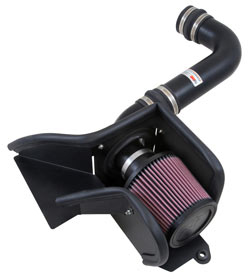
VW Jetta GLI & Passat 2014-2016 avec un système admission d'air 69-9507TTK K&N

L'écran thermique K&N empêche l'air chaud du compartiment du moteur d'entrer dans le Volkswagen Passat de 1.8 2015 et dans le système d'admission de la VW Jetta 2014-2016, en plus il tire profit de l'entrée d'air froid d'usine

La Volkswagen Jetta GLI 2014-2016 est une voiture pratique, pour les personnes avec goût. La plupart des berlines compactes abordables sont plus ou moins aussi ennuyeuses qu'un documentaire de 2 heures sur l'histoire des documentaires. D'autre part, la VW Jetta GLI offre du divertissement d'abord avec une suspension sportive réduite, un différentiel avant de truc pour vous permettre de traverser les courbes, et un style agressif.
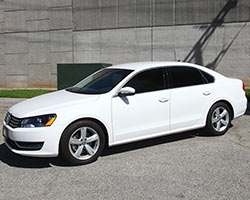
2014-2016 VW Jetta GLI

La Volkswagen Passat 2015 a un turbo-4 de1.8L à refroidisseur intermédiaire, qui compacte 210-ch et 207 lb-pi de couple, mais cela pourrait être amélioré avec un système d'admission d'air de K&N

La VW Jetta GLI 2014-2016 a également un turbo-4 de1.8L à refroidisseur intermédiaire, qui compacte 210-ch et 207 lb-pi de couple. Ce moteur est devenu disponible dans la Volkswagen Passat pour 2015. Cela suffit pour vous faire arriver à 60 mph dans la gamme de secondes 6-haut. Mais si vous voulez transformer votre VeeDub en un véritable Autobahn cruiser, le système d'admission de performance Typhoon 69-9507TTK K&N peut ajouter une puissance estimée de 3,8 ch et 5,7 lb-pi de couple. Et en éliminant les restrictions d'air, cette admission K&N peut aider le turbo à accélérer plus rapidement pour une accélération plus immédiate.

Pour produire de la puissance, un moteur turbo utilise des gaz d'échappement pour faire tourner une turbine qui force l'air à l'intérieur de l'admission. Mais l'air doit d'abord être refroidi, donc il est acheminé par une sorte de «radiateur d'air» appelé refroidisseur intermédiaire. Étant donné que le carburant a besoin d'air pour brûler, ajouter un volume élevé d'air froid riche en oxygène entraînera un cycle de combustion plus intense, ce qui se traduira par plus de puissance. Cependant, la plupart des systèmes d'admission d'usine, comme celui dans votre Jetta/Passat 1.8L turbo 2014-2016, utilisent des tubes d'admission étroits qui sont pleins de virages serrés, et d'autres obstructions.
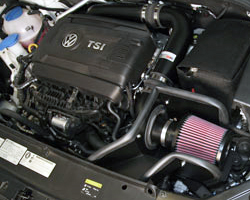
VW Jetta GLI & Passat 2014-2016 avec un système d'admission d'air 69-9507TTK K&N installé dans le compartiment du moteur

Système d'admission de performance Typhoon 69-9507TTK K&N installé sur un turbo 1.8L Volkswagen 2014-2016

Le conduit d'admission d'air de stock peut faire que l'air tourbillonne pendant qu'il entre dans le système, et cette turbulence peut rendre le refroidisseur intermédiare moins efficace. En éliminant ces restrictions et en redressant la voie d'écoulement d'air, le système d'admission de performance Typhoon 69-9507TTK K&N est capable d'alimenter le moteur d'un volume d'air froid plus élevé, en lui permettant d'obtenir plus de puissance d'environ la même quantité de carburant.

Afin de donner à votre turbo VW plus d'air pour travailler, le système d'admission de performance Typhoon de la série 69 de K&N remplace les tubes d'admission étroits en plastique par un tube d'admission plus large en aluminium thermolaqué de K&N. Le tube en aluminium est plié en utilisant une cintreuse à mandrin industrielle, pour fournir un chemin d'écoulement d'air plus lisse et à faible restriction.

L'air entre dans le système à travers un filtre à air de performance à haut débit de K&N qui se trouve derrière un écran thermique pour filtre à air spécifique à l'application, situé là où se trouvait la boîte à air de stock. L'écran thermique K&N empêche l'air chaud du compartiment du moteur d'entrer dans le système, en plus il tire parti de l'entrée d'air froid de l'usine.
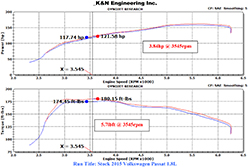
Les résultats Dyno de l'admission d'air de performance 69-9507TTK K&N installée sur un  turbo Volkswagen Passat 1.8L 2015

Dyno results of K&N performance air intake 69-9507TTK installed on a 2015 Volkswagen Passat 1.8L turbo

Le grand filtre à air de gaze de coton réutilisable de K&N inclus dans l'admission d'air 69-9507TTK est capable de filtrer un grand volume d'air en éliminant les contaminants qui sont aussi petits que le diamètre d'un cheveu humain. Cette saleté peut également rester piégée dans les fibres de coton huilées jusqu'à 100,000 miles avant que le filtre ait besoin d'être nettoyé (selon les conditions de conduite). Et comme les tubes d'admission pliés en mandrin de K&N ont des raccords intégrés pour les tuyaux d'aspiration, vous pouvez installer le système d'admission Typhoon de K&N en environ 90 minutes à l'aide d'outils manuels simples.

Chaque système d'admission d'air de performance K&N est conçu pour s'adapter à un moteur spécifique, de sorte que vous ne recevrez jamais des pièces «d'ajustement universel» fragiles. K&N prend la qualité très au sérieux, et chacun de nos systèmes d'admission est soutenu par une garantie limitée de 10 ans/1 million de mile. Pour vérifier les gains en puissance, un système d'admission de performance Typhoon 69-9507TTK de K&N a été installé sur une Volkswagen Passat 1.8L 2015. Les tests dyno ont révélé une augmentation estimée de 3,84 chevaux et 5,7 lb-pi de couple. L'accélération et le son du moteur ont aussi été grandement améliorés. Mais vos résultats individuels peuvent varier en fonction du kilométrage, des modifications et de l'état de votre Jetta GLI/Passat spécifique.

K&N fabrique également beaucoup d'autres pièces de performance pour s'adapter à tout, de Acura à Yamaha. Pour les consulter, cliquez ici pour utiliser l'outil Recherche par véhicule ou cliquez ici pour trouver un distributeur de K&N près de chez vous.

Caractéristiques et avantages du système d'admission de performance Typhoon 69-9507TTK K&N

  • Augmente la puissance et le couple
  • Accentue l'accélération
  • Améliore le son du moteur
  • Les tubes d'admission d'aluminium plié en mandrin réduisent la restriction et augmentent le débit d'air
  • L'écran thermique en aluminium protège l'air froid
  • Le filtre à air réutilisable de K&N peut aller jusqu'à 100,000 milles avant que le nettoyage soit nécessaire (en fonction des conditions de conduite)
  • Facile à installer
  • Soutenu par une garantie limitée d'un million de milles/10 ans

Applications K&N pour le kit d'admission de performance 69-9507TTK

2016 VOLKSWAGEN PASSAT 1.8L
2016 VOLKSWAGEN JETTA GLI 2.0L
2016 VOLKSWAGEN JETTA 1.8L
2015 VOLKSWAGEN PASSAT 1.8L
2015 VOLKSWAGEN JETTA GLI 2.0L
2015 VOLKSWAGEN JETTA 1.8L L4 F/I – US
2014 VOLKSWAGEN JETTA GLI 2.0L
2014 VOLKSWAGEN JETTA 1.8L

Vous pouvez visualiser toutes les admissions d'air que K&N fabrique pour la Volkswagen Jetta sur la page les systèmes d'admission d'air pour Volkswagen Jetta et toutes les admissions d'air que K&N fabrique pour la Volkswagen Passat sur la page les systèmes d'admission d'air pour la Volkswagen Passat. Vous pouvez visualiser tous les produits de performance K&N pour tout véhicule en utilisant l'outil Recherche par véhicule et vous pouvez trouver un distributeur local K&N en écrivant votre emplacement dans la Recherche de distributeur K&N.

clear

K&N RECHERCHE DE PRODUITS     OÙ ACHETER K&N

clear

Ross Latimer's Hot Wheels Custom Harley Wins Big at the DC IMS

Hot Wheels custom Harley side view

Ross Latimer's fast and furious Hot Wheels custom Harley in a quite moment

Understandably, a number of the big, corporate bike builders have won various categories of the J&P Ultimate Builder Competition in the first three stops of the Progressive International Motorcycle Show (IMS). After all, the major players in the custom bike world have the talent, experience, and resources to design and execute some amazing builds.

However, it is refreshing and encouraging that some small, independent builders have had notable success at the competitions as well. Ross Latimer, of Rats Customs, in Nokesville, Virginia, is one of the ‘small pebbles’ who has made big waves at the K&N-sponsored competition. Latimer walked away with two first-place awards at the Washington DC stop of the IMS.

We are going to show you both of Latimer’s winning builds in separate article installments. The focus of this first profile is his show-stopping Hot Wheels custom that won the Modified Harley category. Hot Wheels is a stunning build that will tug at the heart strings of everyone who played with the iconic pocket cars in their youth. However, it is interesting that Latimer’s inspiration for the build was much bigger and louder than the iconic toy cars.

Hot Wheels custom Harley at the Washington DC IMS J&P Competition

The DC International Motorcycle Show was a nice payday for Ross Latimer

“My motivation for building the Hot Wheels bike was growing up and watching Don Prudhomme race the Hot Wheels funny car,” Latimer said. “My family has always been huge into drag racing and still is.”

Latimer’s passion for creating motorized magic stems from that same period in his youth. “That's kind of where my background comes from,” he said. “Growing up watching my dad fabricate and weld and make sparks was awesome, and all I ever wanted to do.”

Latimer’s 2002 Harley-Davidson® Sportster pays tribute to some of the most colorful years in drag racing history in a powerful way – both visually and literally. Let’s start with the literal. Hot Wheels is built around a 1250cc Hammer Performance engine that Latimer calls a “mountain of a motor.” That twin cylinder iron mountain pumps out over 110 horsepower and produces boatloads of torque. Clearly this is not a docile show bike.

Fittingly, that potent V-twin breathes through a K&N performance intake that contributes, in no small way, to the impressive power numbers of the Hot Wheels custom. On the other end, spent combustibles exit through beautiful exhaust bends that are reminiscent of a massive trombone. Certainly, the exhaust note is every bit as melodic to motorheads as any wind instrument.

Hot Wheels custom Harley wheelie

The powerful 1250cc V-twin makes it hard to keep the front wheel down

Like so many passionate builders, Latimer finds joy in elements of the project that may not be instantly recognized by the casual observer. “Some cool features on the bike are the brake line that runs through the swing arm, and the two left fork legs to get rid of the pinch bolt,” said Latimer.

What even the casual observer will appreciate is the scintillating paint job. Latimer’s Harley wears a custom candy teal Hot Wheels paint scheme that extends from the front of the tank though the very cool stubby, ‘snarled-lip’ of a rear fender. Of course, that classic swooping Hot Wheels logo is featured prominently on the tank, and K&N is more than proud that our decal graces the side panel!

From the tall, clean spoked front wheel to the fat, funny car-inspired Dunlop tire out back, the Hot Wheels custom oozes retro-cool.

In the end, the success of the smaller builders and the recognition they are receiving is not lost on Latimer. “I’d like to say I appreciate that K&N sponsors and gives back to the small-time builders,” Latimer said.

Check back for our upcoming feature on Ross Latimer’s other Washington DC IMS J&P show winner.

clear

K&N PRODUCT SEARCH     WHERE TO BUY K&N

Drenched in Carbon Fiber and Oozing Horsepower, this 2015 Ford Mustang Has it All

2015 Ford Mustang with carbon fiber body panels and wide body kit

This 2015 Ford Mustang is anything but your run-of-the-mill pony car. It is one-of-a-kind.

The battle between Ford and Chevy has been an epic fight almost since the two companies began making cars. It has intensified through the years and only got worse after the introduction of the pony car class of vehicle. A pony car is classified as a sporty, high performance American automobile. Currently, three cars fall into that category, the Ford Mustang, the Chevrolet Camaro, and the Dodge Challenger.

It is a known fact that Ford and Chevy owners are bitter foes, at times even rivaling the likes of the Chicago Bears and the Green Bay Packers, or the Hatfields and McCoys for you non-sports readers. No matter what side you are on, it can be agreed that through the years the styling, power, and technology associated with the Mustang and Camaro has grown to a point where they are as popular as ever.

2015 Ford Mustang interior with carbon fiber accents throughout

The interior of John Pudlas Mustang is as spectacular as the exterior

Recently, we were able to get a Mustang owner and a Camaro owner together long enough to get some photos of their respective rides. This is a story about the Mustang. John Pudlas is the Director of Sales for HCM Carbon. He is the owner of the 2015 Ford Mustang GT you see before you. Of course, working for a carbon parts manufacturer, you would expect the car to have some carbon pieces. But what John and HCM Carbon owner, Ernie Sigala have done to this S550 Mustang is incredible.

2015 Ford Mustang with carbon fiber fender flares and Ferrada wheels

The HCM Carbon fender flares cover the Ferrada wheel nicely

Starting with a blank canvas can be a daunting task, but as we have seen with some of Sigala’s past builds, he is up to it. The first thing they did to Pudlas’ Mustang was cut the top off. You read that right, they cut the roof over the front seats completely off. This turned the coupe into the world’s first S550 Mustang targa top. From there it was time to get to work designing wide body fenders, a new hood, front splitter, rear diffuser, a wing, and much more out of carbon for the car.

2015 Ford Mustang with Vortech supercharger and carbon fiber body panels and matte purple wrap

For SEMA and CES, John had his Mustang wrapped in matte purple by EAWraps in Scottsdale, AZ

With those parts being designed, a lowering kit from Steeda was installed, giving the ‘Stang a meaner, more aerodynamic look. To fill the new widened fenders, a set of 20-inch Ferrada wheels was wrapped in 305/30 and 315/35 Nitto rubber and bolted to the four corners. A car with looks like this one had to have something mean under the hood and that was next on the agenda. The 5.0L received some new internals, along with a power adder in the form of a Vortech supercharger. The blower is capped off by a K&N cone air filter to protect the built motor behind it.

John and Ernie built the car to show off their capabilities and subsequently took the car to the 2016 SEMA show and the CES show in Las Vegas. At both shows, the car was a real head turner and gave them a sense of pride knowing they had built an incredible machine that so many people found appealing.

The HCM Carbon Mustang was also featured in the 2017 K&N calendar 89-11493-17 in the month of April.

clear

K&N PRODUCT SEARCH     WHERE TO BUY K&N

NASCAR Changes Their Logo for First Time in 40 Years

NASCAR, Cup Series, Logo

NASCAR changed its logo for the first time since 1976 to include a new font and styling

NASCAR changed its logo for the first time since 1976. The change comes in conjunction with Monster Energy becoming the primary sponsor of the Cup Series. NASCAR, the National Association for Stock Car Racing, was founded in 1948 by Bill France Sr. The original logo had red and white checkered flags crossed with two cars facing each other.

The NASCAR logo has changed four times since the original logo was unveiled in 1948. The first change came in 1956 and was used until 1963. The logo changed again in 1964 until 1975.

The NASCAR logo changed to its multi-color bar in 1976. The latest change is a slight modification of the previous logo, with multi-color bars and a new font.

“Our new NASCAR mark is modern, timeless, and embraces the heritage of our sport,” Jill Gregory, NASCAR's Chief Marketing Officer, said in a release. “It was important for us to recognize our history and implement a piece of each previous mark in the new design. Our goal was to evolve the sport's visual identity to make it concise, relevant and functional, while respecting and maintaining the unique qualities of the original mark.”

NASCAR, Cup Series, Monster Energy, Logo

Monster Energy is the new title sponsor of the NASCAR Cup Series.

The highest level of NASCAR racing was known as the Grand National Series until 1972. The R.J. Reynolds Tobacco Company became NASCAR's first primary sponsor in 1972. It was known as the NASCAR Winston Cup Series until 2003.

In 2004, Nextel Communications became the title sponsor of NASCAR and changed the name to the Nextel Cup Series. In 2008, it became the Sprint Cup Series when Nextel and Sprint merged companies.

Monster Energy became the new title sponsor of the NASCAR Cup Series at the beginning of 2017.

“Monster Energy is a brand built on excitement and enthusiasm, qualities that align with NASCAR,” Brian France, NASCAR Chairman and CEO said in a release. “This sponsorship position is the most unique in all of sports and entertainment, and we are thrilled to have a partner that will help us further elevate the series. Today’s announcement is the culmination of a thorough search, one that resulted in the right partner at this important time in our sport’s history.”

NASCAR, Cup Series

NASCAR used this logo from 1956 to 1973.

The NASCAR K&N Pro Series East and West have gone through name changes as well. The West Series started as the Pacific Coast Late Model Circuit in 1954. It became the Grand National West Series, then the Winston Grand National West Series before K&N took over as the title sponsor of the series.

The K&N East Series was originally formed in 1987 as the Busch Grand National North Series and raced primarily in the northeastern part of the United States. The series name changed to the Busch East in 2006.

In 2003, NASCAR unified the rules of the East and West Series and added the Toyota All-Star Showdown race pitting drivers and teams from both series against each other.

K&N Engineering became the title sponsor of the NASCAR Pro Series East and West Series in 2010.

clear

K&N PRODUCT SEARCH     WHERE TO BUY K&N