Dernières Nouvelles

Does your Sport Compact Need Some Protection?

K&N air filters are made from several layers of cotton gauze soaked in a tacky oil

K&N air filters are made from several layers of cotton gauze soaked in a tacky oil

We are always looking for the next upgrade to do to our imports. Whether it is it a coilover kit, new blow-off valve, or a set of Takata seat belts. What if we told you there was an upgrade you could do that would increase airflow while still keeping your motor protected for less than any of those other upgrades? Drop-in air filters from companies like K&N Filters are designed to increase horsepower, while protecting your engine from harmful impurities.

Whether you drive an Integra, Supra, 240SX, or other sport compact, there is no doubt about the added airflow and the protection that an oiled cotton gauze air filter can offer. K&N air filters, for instance, are comprised of several layers of pleated cotton gauze media coated in a special sticky oil. Let's break it down.

Installing a K&N replacement air filter is extremely easy and usually takes less than 10 minutes

Installing a K&N replacement air filter is extremely easy and usually takes less than 10 minutes

Factory air filters are made of thick folded paper. These are good at stopping dirt and dust from entering your engine, but that's about the only pro. In contrast, K&N air filters flow up to 50% more air due to the high flowing cotton filter media. More air means these filters are designed to increase horsepower, torque, and acceleration; three things that the small engines in popular imports can definitely use more of.

K&N offers air filters for thousands of applications. Check knfilters.com for a complete list

K&N offers air filters for thousands of applications. Check knfilters.com for a complete list

As the OEM paper air filter loads up with dirt, it loses airflow and eventually needs to be changed. K&N air filters use their oil to grab onto particulates, and hold them deep in their web of cotton fibers. The dirt and dust soaks up some of the oil and becomes a part of the filter media. And rather than being thrown out when it gets dirty, these filters are washable and reusable. So not only are K&N Filters good for your engine, they're also good for the environment.

If you're worried about the filter wearing out with all the washing, K&N replacement air filters come with a 10-year/Million Mile Limited Warranty. So this filter could be the last one you buy for your S2K, Civic, RX-7, Evo, or whatever your drive. Check out knfilters.com for a full list of replacement air filters, cold air intakes, and other products they make for your sport compact.

clear

K&N PRODUCT SEARCH     WHERE TO BUY K&N

2014-2017 Hyundai Xcent, Grand, and i10 Air Filter Lasts 50,000 Miles

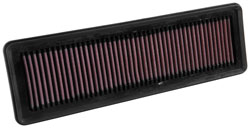
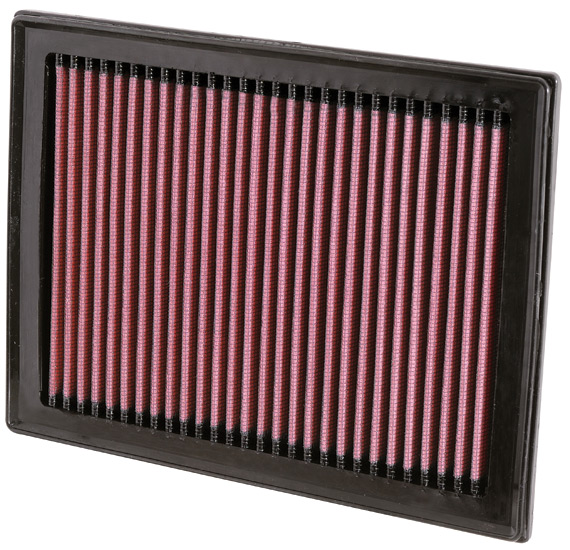
The K&N 33-3049 air filter is for 2014-17 Hyundai Xcent, Grand, and Grand i10 automobiles.

The K&N 33-3049 air filter is designed for 2014-17 Hyundai Xcent, Grand, and Grand i10 models

Founded in 1967, Hyundai Motor Company of South Korea purchased more than one-third of fellow Korean automaker Kia in 2005 and became Hyundai Motor Group, the fourth largest vehicle manufacturer in the world. The company owns the world’s largest integrated automobile manufacturing facility in Ulsan, South Korea, which is capable of producing 1.6 million units a year. It sells its cars in 193 countries including the United States, Canada, Mexico, Panama, Dominican Republic, Brazil, China, India, Japan, Philippines, Turkey, Germany, Czech Republic, Russia, South Africa, Egypt, Libya, Australia, and New Zealand.

Three of the company’s major models include the Xcent, the Grand, and the i10.

Introduced in 2014, the Xcent is a front engine, front-wheel drive 4-door sedan defined as a city car. Two engines are available to power the car –- a 1.25-liter Kappa II 4-cylinder gasoline engine and a 1.1-liter U-Line 3-cylinder diesel engine.

The Hyundai Grand i10 was introduced in 2013. A 5-door hatchback, the car has a choice of four engines –- 1.0-liter Kappa II 3-cylinder, 1.0-liter Kappa II 3-cylinder LPG, 1.25-liter Kappa II 4-cylinder, and a 1.1-liter U-Line 3-cylinder diesel. There is also a choice of a 5-speed manual or 4-speed automatic transmission.

K&N is now offering the 33-3049 washable and reusable replacement air filter for the 2014-2017 Hyundai Xcent, i10, and Grand i10.

The filter is designed to boost horsepower and acceleration and features a multilayered cotton gauze media that is treated with a special grade of oil that makes the cotton strands very sticky. The filter is designed to provide high airflow with little restriction.

Conventional paper air filters must be thick and/or the fibers must be tightly compressed and dense so that they can meet minimum filtration requirements. This means that the paper filters are more restrictive from the start. Moreover, as the paper filters capture more and more contaminants, they clog up restricting air pressure as the atmospheric air pressure outside the filter remains the same. The air pressure differential between the interior and exterior of the filter causes particles to get pulled through the paper medium forcing them through the filter and into the engine.

The K&N 33-3049 air filter is so thin it drops into the existing factory air box.

The K&N 33-3049 air filter is ultra-thin and designed to fit in the existing factory air box

A typical foam air filter features limited surface area, which impedes airflow and dirt holding ability. As a result, dirt builds up on the outside and blocks the filter openings causing higher vacuum pressures, which distort the cells and draws dirt deeper into the filter. Airflow is reduced as cells clog adversely affecting the performance of the filter.

The K&N air filter will last up to 50,000 miles before servicing is required (depending on driving conditions). And since the K&N filters are washable they can be used over and over again while conventional paper filters will have to be replaced and discarded after just 15,000 miles. If you drive your car 150,000 miles, you will have to dispose of 10 air filters.

That is not the case with K&N washable and reusable air filters. Moreover, K&N offers an air filter cleaning kit that is specially formulated to cleanse and rejuvenate the air filter so that it can be reused for the life of your car.

K&N is so sure of the quality of its air filters it backs them with a 10-Year/Million Mile Limited Warranty. The warranty promises that the air filter will last up to 10 years or 1,000,000 miles without the need for replacement.

Since the air filter is designed to fit into the existing factory air box, installation is quick and easy and can be achieved with common hand tools.

The K&N 33-3049 replacement air filter is designed for the following vehicles:

2017 HYUNDAI XCENT 1.2L L4 Fuel Injection - All Models
2017 HYUNDAI XCENT 1.0L L3 Fuel Injection - All Models
2017 HYUNDAI I10 1.2L L4 Fuel Injection - All Models
2017 HYUNDAI I10 1.0L L3 Fuel Injection - OEM 28113B9000
2017 HYUNDAI GRAND I10 1.2L L4 Fuel Injection - All Models
2017 HYUNDAI GRAND I10 1.0L L3 Fuel Injection - All Models
2016 HYUNDAI XCENT 1.2L L4 Fuel Injection - All Models
2016 HYUNDAI XCENT 1.0L L3 Fuel Injection - All Models
2016 HYUNDAI I10 1.2L L4 Fuel Injection - All Models
2016 HYUNDAI I10 1.0L L3 Fuel Injection - OEM 28113B9000
2016 HYUNDAI GRAND I10 1.2L L4 Fuel Injection - All Models
2016 HYUNDAI GRAND I10 1.0L L3 Fuel Injection - All Models
2015 HYUNDAI XCENT 1.2L L4 Fuel Injection - All Models
2015 HYUNDAI XCENT 1.0L L3 Fuel Injection - All Models
2015 HYUNDAI I10 1.2L L4 Fuel Injection - All Models
2015 HYUNDAI I10 1.0L L3 Fuel Injection - OEM 28113B9000
2015 HYUNDAI GRAND I10 1.2L L4 Fuel Injection - All Models
2015 HYUNDAI GRAND I10 1.0L L3 Fuel Injection - All Models
2014 HYUNDAI XCENT 1.2L L4 Fuel Injection - All Models
2014 HYUNDAI XCENT 1.0L L3 Fuel Injection - All Models
2014 HYUNDAI I10 1.2L L4 Fuel Injection - All Models
2014 HYUNDAI I10 1.0L L3 Fuel Injection - OEM 28113B9000
2014 HYUNDAI GRAND I10 1.2L L4 Fuel Injection - All Models
2014 HYUNDAI GRAND I10 1.0L L3 Fuel Injection - All Models

clear

K&N PRODUCT SEARCH     WHERE TO BUY K&N

Les améliorations de performance pour la Nissan Maxima sont conçues pour apporter puissance

La Nissan Maxima est une berline familiale de taille moyenne qui existe depuis 1976. C’était une version haut de gamme de la Bluebird connue sous le nom de Bluebird Maxima. La Nissan Maxima eut sa propre ligne de production à partir de 1981 et est toujours fabriquée à ce jour.

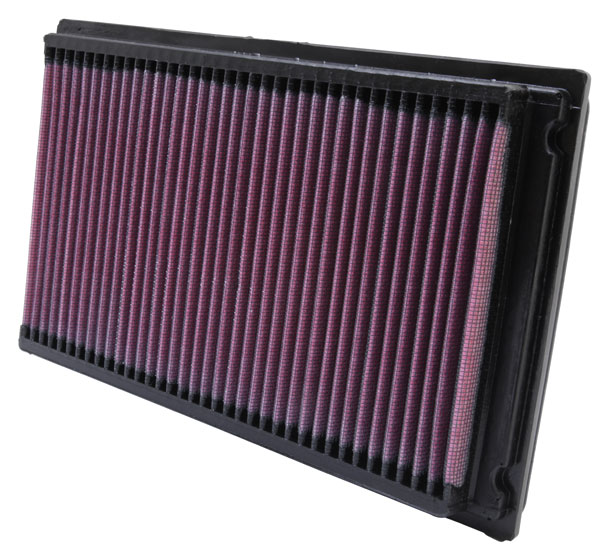
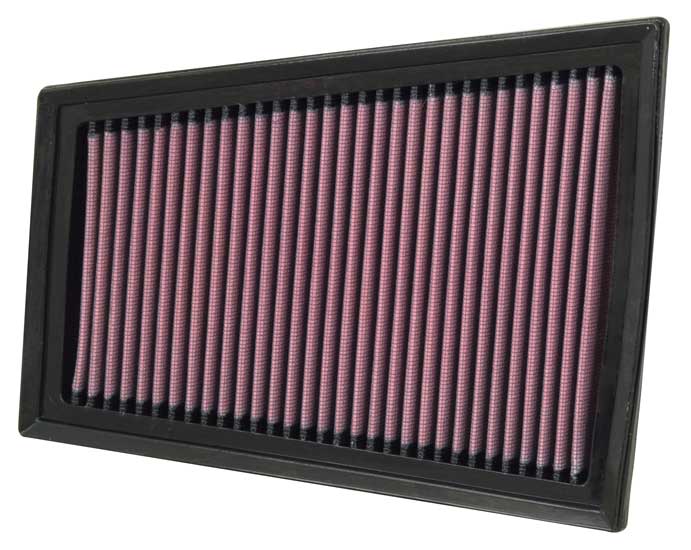
Air Filter 33-2031-2 for Nissan Maxima
Filtre à air 33-2031-2 pour la Nissan Maxima

K&N fabrique de nombreux améliorateurs de performance pour la Nissan Maxima. Les filtres à air de remplacement, les conduits d’entrée d’air de remplacement, les filtres à huile premium et les filtres à air d’habitacle K&N sont conçus pour les amateurs de voiture qui veulent tirer le meilleur de leur Maxima.

Les filtres à air de remplacement K&N sont des améliorateurs de performance très pratiques. Ils sont conçus pour permettre un débit d’air élevé et une protection optimale du moteur. Les filtres à air K&N sont conçus pour augmenter la puissance et l’accélération tout en fournissant un excellent filtrage.

Le filtre à air haut-débit 33-2031-2 de K&N est conçu pour:
Les modèles Nissan Maxima de 2002 à 2014, et les nouveaux modèles 2016 et 2017 avec un moteur de 3,5 litres,
Les modèles Nissan Maxima de 2000, 2001, 2002, 2003, 2004 et 2005 avec un moteur de 3 litres,
et les modèles Nissan Maxima de 2000 à 2005 avec un moteur de 2 litres.

Construits avec quatre couches de gaze de coton reparties entre deux grilles avec revêtement en époxy, ces filtres à air dureront aussi longtemps que votre Maxima. Les filtres à air haut débit K&N sont conçus pour s’insérer directement dans la boîte à vent d’origine de votre Maxima, sans découpage et sans raccord.

L’installation des filtres à air K&N est si simple que c’est une des améliorations de performance les plus faciles pour votre Maxima. Le modèle 33-2031-2 est lavable, réutilisable et bénéficie de la célèbre Million Mile Limited Warranty™ de K&N . Vous n’aurez plus jamais besoin d’un autre filtre à air pour votre Maxima.
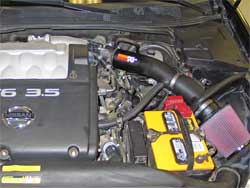
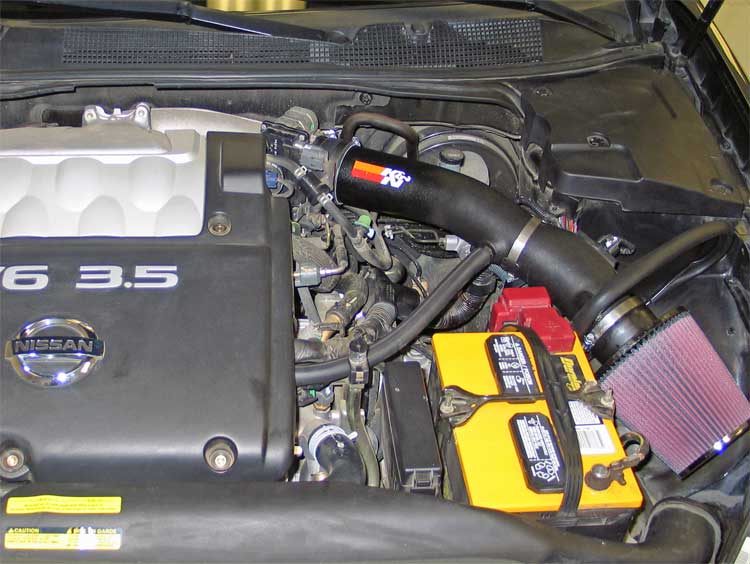
Nissan Maxima de 2005 avec moteur de 3.5L avec le conduit d’entrée d’air K&N installé.

Les conduits d’entrée d’air K&N peuvent augmenter la puissance. Les modèles Nissan Maxima de 2009, 2010, 2011, 2012, 2013, 2014, 2015, et 2016 avec un moteur de 3,5 litres utilisent le 69-7002TTK, qui produit un gain estimé de 13.25 chevaux @ 5249 tours/minute.

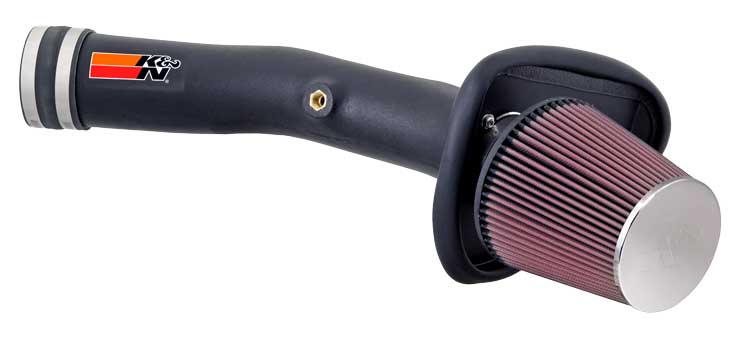
Les propriétaires de Nissan Maxima de 2004, 2005, 2006, 2007 et 2008 avec un moteur de 3,5 litres utilisent le conduit d’entrée d’air 57-6015 de K&N. Ils peuvent aussi choisir le filtre à air de remplacement 57-6015 pour leur Nissan Maxima. Le 57-6015 est un conduit non-métallique rotatif conçu pour réduire la température de l’air aspiré et augmenter la puissance de façon notable.
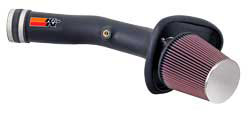
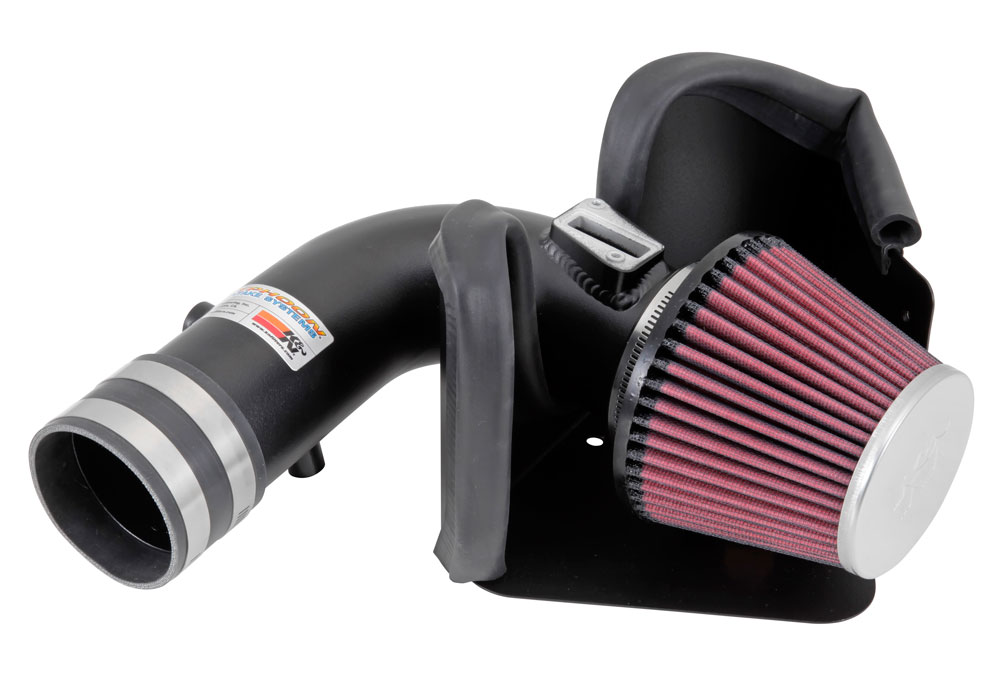
Air Intake 57-6015 for Nissan Maxima
Conduit d’entrée d’air 57-6015 pour la Nissan Maxima

Les essais sur dynamomètre de K&N ont été effectués sur une Nissan Maxima de 2005 avec un moteur de 3,5 litres, pour un résultat de 187,98 chevaux @ 5001 tours/minute. Avec le kit de conduit d’entrée d’air 57-6015, le même véhicule a atteint 195,41 chevaux @ 5000 tours/minute. C’est une augmentation spectaculaire de 7,43 chevaux avec un simple système de conduit d’entrée d’air K&N. L’installation est simple grâce au manuel d’instructions K&N. Ce kit s’installe en à peu près 90 minutes avec des outils standards

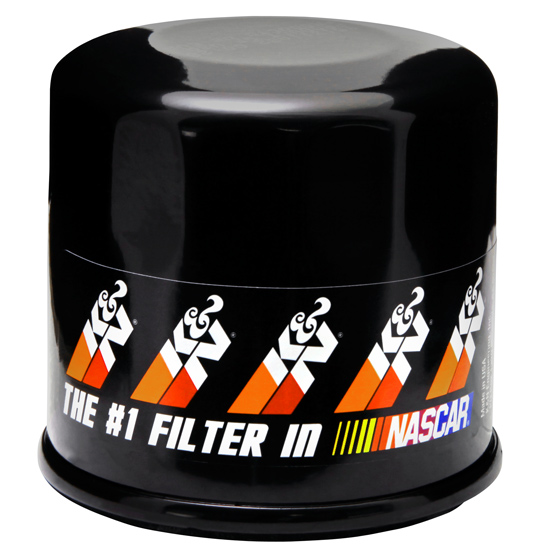
Des filtres à huile premium K&N sont également disponibles pour la Nissan Maxima. Leurs parois sont plus épaisses pour réduire les dégâts causés par les cailloux et les débris. Les filtres ont une résistance accrue et une durée de vie élevée.

Filtre à huile PS-1008 pour la Nissan Maxima
Filtre à huile PS-1008
pour la Nissan Maxima
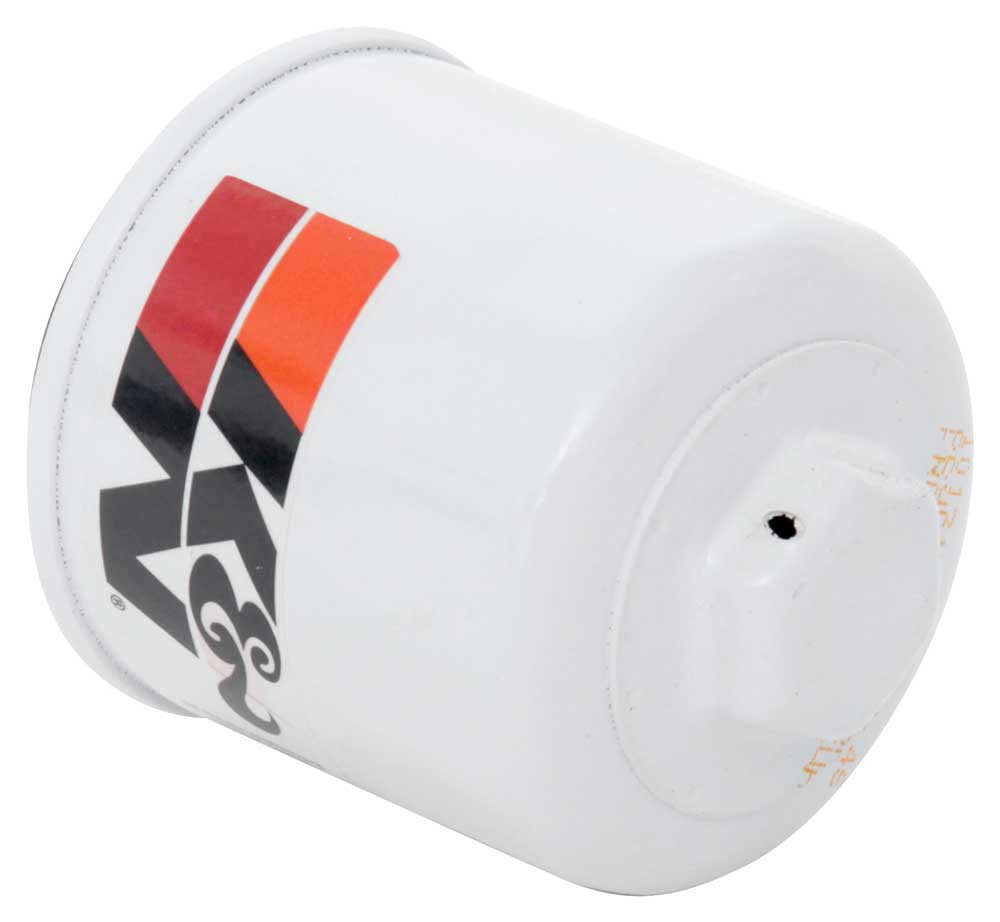
Filtre à huile HP-1008 pour Nissan Maxima
Filtre à huile HP-1008
pour la Nissan Maxima

Les filtres à huile K&N permettent un débit d’huile plus élevé tout en fournissant une protection nécessaire à la durabilité du moteur. C’est pourquoi les filtres à huile K&N pour la Nissan Maxima sont couverts par notre garantie limitée quand ils sont installés et remplacés en suivant les intervalles d’entretien recommandés par le fabricant du moteur et de l’équipement.

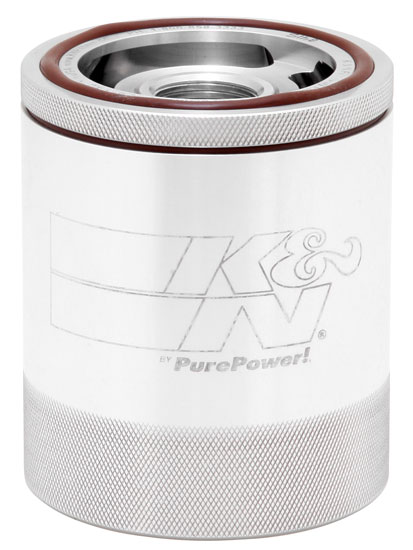
Filtre à huile SS-1008 pour la Nissan Maxima
Filtre à huile SS-1008
pour la Nissan Maxima
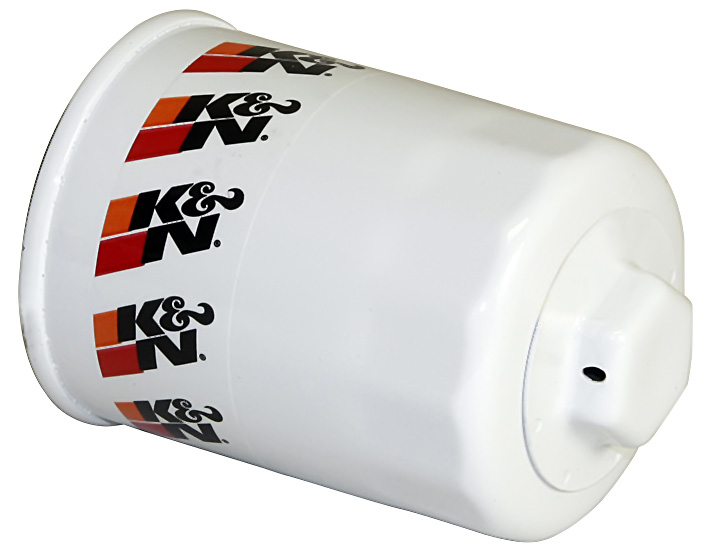
Filtre à huile HP-1010 pour la Nissan Maxima
Filtre à huile HP-1010
pour la Nissan Maxima

Les moteurs des modèles de 2002 à 2007 de la Nissan Maxima avec un moteur de 3,5 litres, sont protégés de façon optimale avec les filtres à huile à parois PS-1008 et HP-1008. Le PS-1008 fait partie de la série K&N Pro Series Oil Filters développée pour un débit élevé, qui aide à améliorer les performances du moteur en réduisant la restriction causée par le filtre à huile. Le HP-1008 quant à lui a été développé avec les exigences des voitures de course en tête, mais il s’est vite imposé chez les utilisateurs ordinaires grâce à son écrou hexagonal de 2,5 centimètres soudé en haut de la boîte ce qui rend l’installation et la désinstallation faciles avec un outil standard.

Le SS-1008 est également disponible pour les modèles 2002 à 2017 de la Nissan Maxima avec un moteur de 3,5 litres. Contrairement à d’autres filtres à huile de remplacement, le SS-1008 est réutilisable et durera aussi longtemps que votre véhicule dans des conditions normales, tout en fournissant la protection de moteur optimale qui a fait la réputation des filtres K&N.

Les modèles Nissan Maxima de 2000 et 2001 avec un moteur de 3 litres utilisent le filtre à huile K&N HP-1010 pour des performances et une protection accrues.

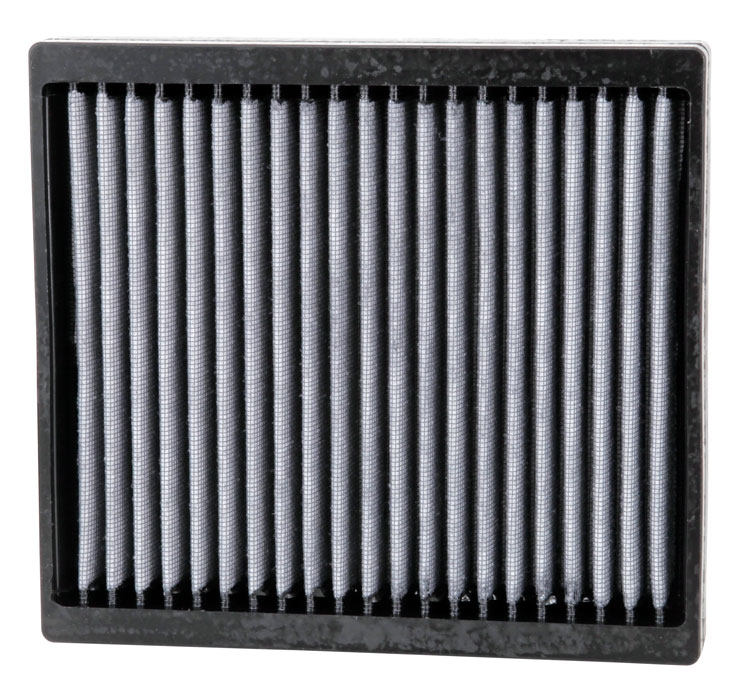
Le filtre à air d’habitacle VF2004 pour la Nissan Maxima
Le filtre à huile VF2004
pour la Nissan Maxima

K&N produit aussi le filtre à air VF2004, un filtre à air d’habitacle réutilisable pour les modèles Nissan Maxima de 2004 à 2008 avec un moteur de 3,5 litres. Conçu pour nettoyer et rafraîchir l’air entrant, le filtre à air lavable VF2004 de K&N aide à contrôler les odeurs et peut filtrer la majorité des moisissures, champignons, spores, bactéries, germes et pollens tout en permettant un débit d’air élevé et en réduisant la pression sur votre système HVAC.

K&N fabrique aussi des produits de performance pour les modèles antérieurs de la Nissan Maxima. Pour trouver les produits K&N qui conviennent à votre Nissan Maxima ou à n’importe quel autre véhicule, utiliser la fonction de recherche sur knfiltres.com.

Les propriétaires d’une Nissan Sentra peuvent bénéficier des améliorateurs de performance de K&N

La Nissan Sentra est a été lancée comme voiture de classe économique en 1982. Après plusieurs générations d’améliorations elle est passée dans la catégorie intermédiaire en 2001. Connue pour son efficacité en matière d’économie de carburant, ses performance et son confort, la Nissan Sentra est une voiture de qualité pour un prix raisonnable.

Filtre à air 33-2409 pour la Nissan Sentra
Filtre à air 33-2409
pour la Nissan Sentra


Filtre à air 33-2031-2 pour la Nissan Sentra
Filtre à air 33-2031-2
pour la Nissan Sentra


Filtre à air 33-2376 pour la Nissan Sentra
Filtre à air 33-2376
pour la Nissan Sentra

K&N Engineering conçoit et fabrique des améliorateurs de performance depuis 1969. Les amateurs de voiture qui veulent maximiser la puissance et l’accélération de leur véhicule utilisent les filtres à air, les conduits d’air de performance et les filtres à huile premium de K&N pour protéger et optimiser leur moteur.

Les filtres à air de remplacement de K&N sont conçus pour optimiser la puissance et l’accélération tout en fournissant une très bonne filtration afin de garder le moteur propre. Ils sont fabriqués de façon à s’insérer dans la boîte à vent d’origine de la Sentra sans qu’il y ait besoin de les couper ou de les fourrer. Rien de plus facile pour améliorer les performances de la voiture. Les filtres à air de K&N pour la Sentra sont lavables, réutilisables et bénéficient de la garantie limitée de K&N sur 1,6 millions de kilomètres.

Les modèles de 2007 à 2012 de la Nissan Sentra avec un moteur de 2,5 litres et les modèles de 2013 à 2017 de la Nissan Sentra avec un moteur de 1,8 litres utilisent le filtre à air haut-débit 33-2409 de K&N pour garantir la performance et la filtration à vie.

Le filtre à air 33-2031-2 de K&N a été conçu pour les modèles de Sentra ci-dessous:
Les modèles de 2002 à 2006 de la Nissan Sentra avec un moteur de 2,5 litres
Les modèles de 2000 à 2001 de la Nissan Sentra avec un moteur de 2,0 litres
Les modèles de 2000 à 2006 de la Nissan Sentra avec un moteur de 1,8 litres

Les modèles de 2007 à 2012 de la Nissan Sentra avec un moteur de 2 litres utilisent le filtre à air 33-2376 de K&N. Le modèle 33-2376, comme tous les filtres à air de K&N, durera aussi longtemps que votre Sentra.

Le conduit d’entrée d’air 69-7003TTK pour la Nissan Sentra
Le conduit d’entrée d’air 69-7003TTK
pour la Nissan Sentra

Les conduits d’air de performance de K&N pour la Nissan Sentra augmenteront à coup sûr la puissance du véhicule. En remplaçant votre filtre à air et l’ensemble du système de conduit d’entrée d’air avec un filtre à air haut-débit et un tube d’entrée d’air de K&N vous sentirez la différence. De plus, l’installation se fait généralement en 90 minutes ou moins ! Nous avons fabriqués nos systèmes de conduits d’entrée d’air spécifiquement en utilisant les les trous et points de montage d’origine, ce qui rend l’installation très simple.

Le conduit d’entrée d’air 69-7000TR pour la Nissan Sentra
Le conduit d’entrée d’air 69-7000TR
pour la Nissan Sentra

La Nissan Sentra de 2013 et 2015 avec un moteur de 1,8 litres peut voir sa puissance augmenter de 2,37 chevaux @ 5255 tours/minute avec le 69-7003TTK. La Nissan Sentra de 2007 à 2012 avec un moteur de 2,5 litres utilise le 69-7001TTK et obtient des gains de puissance d’environ 6,69 chevaux @ 59000 tours/minute.

Les propriétaires de modèles de Nissan Sentra de 2002 à 2006 avec un moteur de 2,5 litres peuvent augmenter la puissance avec un système d’entrée d’air de performance 69-7000TP ou 69-7000TR de K&N. Le 69-7000TP utilise un tube d’entrée d’air en aluminium poli pour régulariser et redresser le débit d’air dans votre moteur. Le 69-7000TR de K&N a un tube d’entrée d’air recouvert de poudre rouge qui se remarque sous le capot. Les tests de K&N montre une augmentation d’environ 7,71 chevaux @ 5253 tours/minutes avec ces kits d’entrée d’air.


Filtre à huile HP-1008 pour la Nissan Sentra
Filtre à huile HP-1008
pour la Nissan Sentra

K&N propose des filtres à huile premium pour la Nissan Sentra construits pour résister aux chocs grâce à leurs parois ultra-épaisses. Le résultat : une meilleure protection contre les cailloux et les débris. Ils ont aussi des taux de débit élevés et protègent votre moteur contre les contaminants dangereux. L’écrou de 2,5 centimètres fixés en haut du filtre rendent sa désinstallation très facile avec un outil standard.

Le filtre à huile HP-1008 de K&N convient aux véhicules suivants:
La Nissan Sentra de 2007 à 2012 avec un moteur de 2,5 litres
La Nissan Sentra de 2007 à 2012 avec un moteur de 2,0 litres
La Nissan Sentra de 2000 et 2001 avec un moteur de 2,0 litres
La Nissan Sentra de 2000 à 2017 avec un moteur de 1,8 litres


Filtre à huile HP-1010 pour la Nissan Sentra
Filtre à huile HP-1010
pour la Nissan Sentra

Le HP-1010 de K&N est conçu pour les Nissan Sentras de 2002 à 2006 avec un moteur de 2,5 litres et les Nissan Sentras de 2004, 2005 et 2006 avec un moteur de 1,8 litres.

K&N propose de nombreux améliorateurs de performance pour des modèles antérieurs de la Nissan Sentra. Pour trouver le produit qui vous convient vous pouvez utiliser la fonction de recherche sur knfiltres.com

K&N Off-Roader Cody Rahders Takes A Top 10 At The Baja 500 In His Polaris RZR

New components and strengthening have been added since last year's race

Cody and his father have been developing their Polaris RZR into an off-road contender

Cody Rahders, who started racing long before he could legally drive on the streets, was an extremely successful competitor in short-course off road racing. Primarily contesting the Lucas Oil Off-Road Series in classes that included Superlites, Pro Lites, and the UTV classes, it was in a Polaris RZR in the Production 1000 class where he made his mark with two consecutive championships.

Cody, along with dad Doug, made the decision to break out and take on off-road racing. They’d continue their relationship with Polaris and race the RZR, but in doing so stepped into one of the most highly-subscribed and competitive classes in off-road racing.

For example: for the recent Baja 500, 26 side-by-sides were entered in the Pro UTV Forced Induction class, that’s more than 10 percent of all entries. And remarkably, the top finishing Pro UTV FI came in with a lower time than the winners in Class 1/2, Class 5, Class 7, Class 7SX, Class 11, and Class 12. And would have kicked the last place finisher in Trophy Trucks back one position. That’s competitive. Further, of the 26 only two UTVs didn’t finish, so you have to earn your wins and not simply drive around waiting for other competitors to crash out.

Cody, Doug, co-drivers James Hill and Kevin Sullivan, and team were in much better shape for this year’s Baja 500 that last’s. They rolled into Ensenada without the electrical problems that plagued them the previous year and were confident they could achieve a strong finish. Cody ran in fifth through most of the event, broke 40 miles from the finish, made the repair and drove in for a seventh-place finish.

We had a chance to grill Cody about the Baja 500 and whatever else is going on in his life. Here’s what he had to say:

Cody is entered in one of the most compeitive classes in desert racing

To say that Cody was exited about entering the Baja 500 was a but of an understatement

K&N: How was this year's 500 versus last year's?

Cody Rahders: The course is always rough but temps were cooler plus we were better organized and better prepared.

K&N: Did you feel better prepared? Was the team and the UTV better prepared?

CR: The car only went 160 miles at last year’s Baja 1000 before we folded an A-arm and DNF'd so it had relatively low miles on it which made prep easy and after 5 starts in Baja, my dad began to have an understanding of who and what we needed for spares and where they needed to be on course.

K&N: Last year "UTV Driver" wrote "that the desert's not been kind to you." You laughed when you read it, sort of agreeing. Are things better for you out there?

CR: Their "odds" chart is always funny but in my case it’s been accurate. The biggest thing that helped is slowing down, not a lot but just enough to help the car live and get it to the finish. We need to invest in some better parts in key areas that should allow me to pick up the pace.

K&N: The course ran more on the west side of the peninsula than last year, where it was run mainly on the east side. Did that have any impact on you or your UTV?

The end of a long day but the effort was worth it

Cody and his two co-drivers James Hill and Kevin Sullivan enjoy the spoils of their Top 10 finish

CR: Only difference for me is it didn't feel like we were racing in a blast furnace this year (115 degrees last year – Ed.). It’s Baja, it’s rough.

K&N: The winner set a blistering pace. His time would have placed him second to last in Trophy Trucks. You came in about two hours later. Did you have trouble in the desert? In the pits? Or had you decided on a pace you thought would bring you home to a good finish?

CR: We don't have the budget (yet) to run at the leaders pace, simple as that. My plan was top 5, to run conservative the first 400 and maintain a top 10 pace then push the last 100 miles and demonstrate we can finish strong. I ran as high as I think it was 3rd or 4th coming into our second pit at race mile 160 but broke an axle coming through a wash and had to have it changed. I lost a few spots there, gained some back and by race mile 240 was in 5th through 440 then had the threaded end of the right outer CV joint break off which ruined a wheel bearing. By the time we got the car out and fixed I lost an hour and a few spots. I got a couple positions back but everyone was so spread out it was just get to the end and finished 7th.

K&N: On top of your racing you’re also a full-time college student. How's school going?

Cody is studying engineering in college and working part-time at Fox Shox

Perhaps Cody's mind wasn't completely on his college course work as he prepared for the 500

CR: Good, I’m busy though and taking a physics class over the summer break so I can try to transfer to SDSU in the fall.

K&N: If that weren’t enough, you are working at Fox Shox, tuning UTV shocks. Are you still working at Fox?

CR: Yes. When I'm not in school I work in the engineering department at Fox. It’s awesome to be on the design side and can’t thank Fox enough for the opportunity.

K&N: Did you tune some shocks specifically to your liking?

CR: Yep, mine! Shocks are personal, it’s not a one size fits all. If someone doesn't know what they like we have base settings to get them started then take them testing to develop their skills and learn how the shock works in different conditions. Then we can tune it to their style of driving.

Congratulations on your finish at the Baja 500 and thank you for your time Cody. Good luck with the rest of the season.

clear

K&N PRODUCT SEARCH     WHERE TO BUY K&N